
Aik Berik Village Profile
Aik Berik Village is a rural village located in Central Lombok, Indonesia. Known for its strong agricultural traditions and close-knit community, Aik Berik Village represents everyday village life away from the island’s coastal tourism areas. This page provides general information about the village’s history, geography, and social conditions, presented for visitors and readers seeking an authentic overview of the area.
Adress
Jl. Pariwisata, Aik Berik, Kec. Batukliang Utara, Lombok tengah
Populations
~8,705 People
Brief history of Aik Berik Village
The history of Aik Berik Village is closely connected to early agricultural settlements in Central Lombok. Traditionally, the village developed around fertile land and natural water sources that supported farming and daily life. Over time, Aik Berik Village grew as families settled permanently, forming a community structure based on cooperation, land use, and local customs that are still visible today.
From early settlement to more recent developments, Aik Berik Village has remained closely connected to agriculture and rural traditions. While modernization has gradually influenced daily life, changes have occurred at a modest pace. Small-scale tourism and increased mobility have begun to appear in recent years, yet the village continues to maintain its traditional character rather than transforming into a tourism-centered destination.
General Village Profile Information
Geographical Location of Aik Berik Village
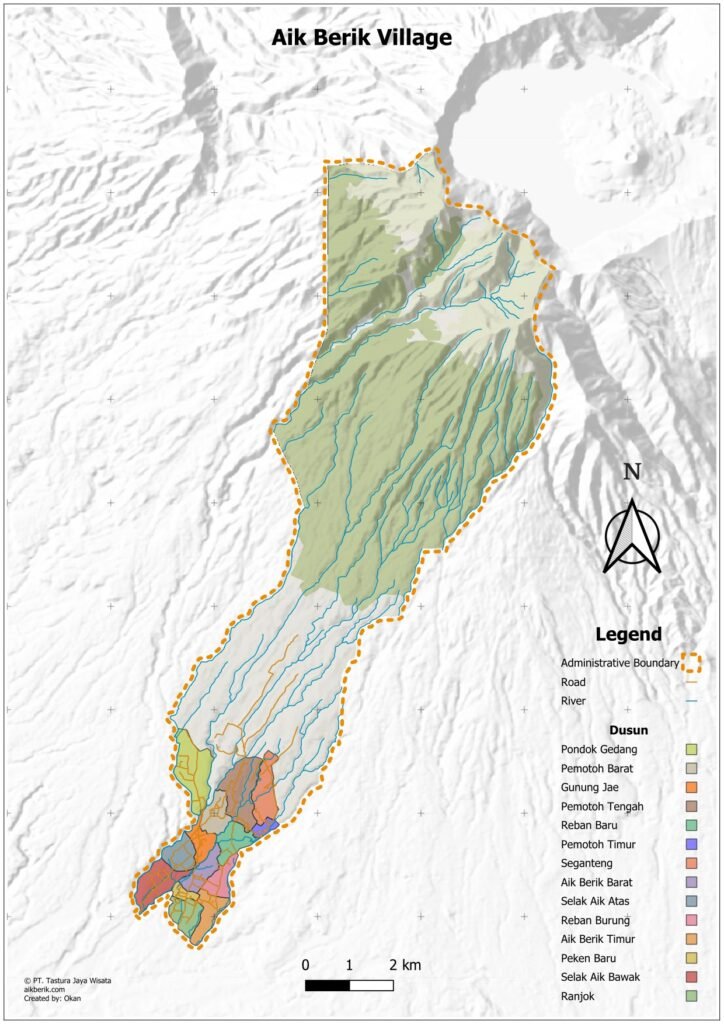
Aik Berik Village is geographically located in the inland area of Central Lombok, surrounded by agricultural land, hills, and small rivers. The village landscape is dominated by fields and rural pathways that connect residential areas with farming zones. This geographical setting strongly influences daily activities and the local way of life.
Due to its inland position, Aik Berik Village experiences a predominantly rural environment with limited urban development. As a result, agriculture remains closely connected to natural conditions such as rainfall and soil quality. In addition, the surrounding landscape supports small-scale farming that sustains most households in the village.
From a geographical perspective, Aik Berik Village covers a moderately wide rural area with varied elevation and terrain. The village boundaries and physical characteristics help define its agricultural patterns and accessibility within Central Lombok.
- Total Area: approximately 50.3 km²
- Elevation: around 445 meters above sea level
- Topography: hilly and highland areas
- Boundaries
- North: Mount Rinjani National Park
- East: Setiling Village
- South: Teratak Village
- West: Lantan Village
Demographic Conditions
The demographic conditions of Aik Berik Village reflect the characteristics of a rural community in Central Lombok. Most residents live in family-based households, with daily life centered around agriculture and local economic activities. Population growth has occurred gradually, allowing social structures and community relationships to remain relatively stable over time.
Education Level
Education in Aik Berik Village is primarily centered on basic and secondary learning, with most residents completing elementary to junior high school within the local area. In recent years, the number of students continuing to senior high school has gradually increased. For higher education, many young people pursue studies in nearby towns such as Praya and Mataram. In addition, non-formal education, including small business training, tourism guiding courses, and digital skills development, is becoming increasingly common within the community.
Mobility and Employment Trends
Mobility and employment trends in Aik Berik Village are closely linked to local economic conditions and access to nearby urban centers. While many residents work within the village, particularly in agriculture, small trade, and tourism-related activities, others seek employment opportunities in surrounding areas such as Praya, Mataram, or Lombok’s tourism hubs. This pattern reflects a flexible livelihood strategy, where seasonal work and temporary migration complement village-based employment.
Social Conditions of the Community
The social life of Aik Berik Village is characterized by strong community cohesion supported through shared activities and social interaction. Residents regularly engage in collective efforts such as community service, religious gatherings, cultural ceremonies, and youth-led initiatives. Public spaces and basic social facilities, including meeting areas, places of worship, schools, and sports fields, play an important role in supporting daily social interaction and maintaining local traditions.
Economic Conditions of Aik Berik Village
Agriculture (Primary Economic Sector)
Agriculture remains the primary economic sector in Aik Berik Village, providing livelihoods for a significant portion of the community. Farming activities are largely small-scale and family-based, focusing on crops suited to the village’s highland environment. Agricultural work not only supports household income but also shapes daily routines and seasonal patterns within the village.
Livestock
Livestock farming in Aik Berik Village serves as a complementary economic activity alongside agriculture. Many households raise livestock such as cattle, goats, poultry, and freshwater fish, while small-scale beekeeping, including trigona honey production, has also become part of local livelihood practices. These activities support household food needs and provide additional income, helping to strengthen economic resilience, particularly outside the main agricultural seasons.
Tourism Sector
The tourism sector in Aik Berik Village has developed gradually alongside the village’s natural landscape and rural character. Visitors are mainly drawn to outdoor attractions and nature-based experiences, which are managed on a community level and often integrated with local livelihoods. Tourism provides supplementary income for residents while encouraging the preservation of natural surroundings and traditional ways of life.
MSMEs and Creative Economy
Micro, small, and medium enterprises (MSMEs) in Aik Berik Village contribute to the local economy through home-based businesses and small-scale production. These activities often include food processing, handicrafts, and services linked to agriculture and tourism. The creative economy continues to grow gradually, supported by community initiative and practical skills development rather than large-scale commercial operations.
Economic and Tourism Development Opportunities
Aik Berik Village has the potential for gradual economic and tourism development based on its natural environment and community resources. Opportunities may include the integration of agriculture with tourism activities, the development of nature-based education, and the expansion of trekking routes, camping areas, and small-scale homestays. Local products such as coffee and forest-based goods also present possibilities for community-led branding. With sustainable planning and active involvement from local residents, particularly young people, these opportunities can support long-term economic growth without altering the village’s rural character.